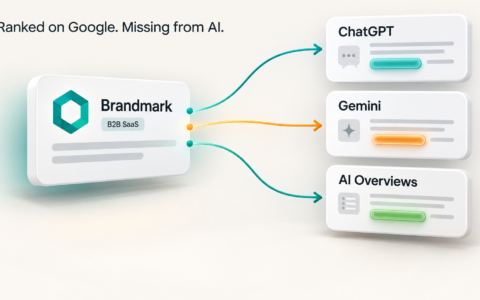



Your brand exists in the real world. But if AI can’t confidently identify who you are, what you do, and why you’re credible—it won’t recommend you. That’s the entity problem. And it’s more common than most founders realise.
Reading time: 10–12 minutes | Level: Beginner to Intermediate
What You’ll Learn in This Guide
By the end of this article, you will understand:
- What entity SEO is and why it matters more than ever in 2026
- How AI engines build their understanding of your brand — and what breaks that process
- The five components of a strong entity signal — and how to check yours right now
- Why entity authority is the single most important foundation for GEO
- The exact steps to establish, strengthen, and protect your brand’s entity across every platform
Table of Contents
1. Why AI Needs to Know Who You Are Before It Recommends You
Before AI can recommend your brand, it has to understand your brand.
Not in the way a human understands it—by visiting your website, reading your about page, and forming an impression. AI builds its understanding algorithmically, by cross-referencing dozens of sources simultaneously and looking for consistent, coherent signals that tell it: this brand exists, this is what it does, and this is why it’s credible.
When those signals are clear and consistent—AI describes your brand confidently and recommends you readily.
When those signals are fragmented, contradictory, or absent—AI hedges, misrepresents, or ignores you entirely.
This is the entity problem. And it sits underneath almost every AI visibility failure we see in our GEO audits.
A brand can have excellent content, strong backlinks, and a well-ranked website—and still be consistently absent from AI-generated recommendations because AI can’t confidently resolve who they are. Not because the brand isn’t credible. Because the signals don’t add up to a clear, confident picture.
📌 QUICK DEFINITION
An entity, in the context of search and AI, is any distinctly identifiable thing — a brand, a person, a place, a product. Entity SEO is the practice of ensuring that AI engines and search algorithms can clearly identify your brand as a distinct, credible, consistently described entity — and associate it with the right topics, services, and audience.
2. What Is Entity SEO?
Traditional SEO is built around keywords—matching the words on your page to the words in a search query.
Entity SEO operates at a different level. It is about establishing who you are, not just what you say.
Search engines and AI systems have moved beyond keyword matching toward what’s called a Knowledge Graph model—a map of entities and the relationships between them. Google’s Knowledge Graph, for instance, contains hundreds of billions of facts about entities—brands, people, places, concepts—and how they relate to each other.
When someone searches for “best GEO agency in India,” Google and AI engines aren’t just matching those words to pages that contain them. They’re asking: which entities are associated with GEO, with agencies, with India — and which of those entities has the strongest authority signals?
The brand with the clearest, most consistent, most widely corroborated entity profile wins that answer. Not necessarily the brand with the most content or the highest domain authority.
It is also worth noting that entity signals don’t just influence AI visibility. Google’s ranking algorithm has incorporated entity recognition for years—particularly for branded searches and high-stakes categories. A stronger entity profile improves how both traditional search and AI engines understand and represent your brand, making it one of the highest-leverage investments across your entire search visibility strategy.
💡 Key Insight
Entity SEO is not a new tactic layered on top of your existing strategy. It is the infrastructure that makes your entire GEO strategy work. Without a clear entity signal, your content can’t be correctly attributed, your citations can’t be consistently accumulated, and your AI visibility will remain unreliable regardless of how much you invest in everything else.
3. How AI Builds Its Picture of Your Brand
When an AI engine encounters your brand name—in a query, in a piece of content, in a citation—it cross-references multiple data sources simultaneously to build a composite picture of who you are.
There are five primary signal types it draws from.
Signal 1—Your Website’s Core Pages
Your homepage, About page, and Services pages are the starting point. AI looks for a clear, consistent description of what your brand does, who it serves, and what makes it credible. Vague or generic language—”we deliver exceptional results for our clients”—provides nothing for AI to extract or attribute with confidence.
The test: can AI identify your brand’s primary category, core service, and target audience from your homepage in under 30 seconds? If not—it can’t build a confident entity picture from your site.
Signal 2—Your Knowledge Panel and Structured Data
Schema markup—structured data added to your website’s code—tells search engines and AI systems explicitly what your brand is, what category it belongs to, who founded it, where it operates, and how it relates to other entities.
Without schema markup, AI infers these facts from context. Inference is inherently less reliable than explicit declaration. A brand with well-implemented Organisation schema, sameAs properties linking all its profiles, and accurate structured data gives AI a clean, machine-readable entity record to work from.
⚡ Quick Win
Add Organisation schema to your website today. At minimum, include: name, description, url, logo, foundingDate, areaServed, and sameAs properties linking to your LinkedIn, Google Business Profile, Crunchbase, and any other authoritative profiles. This single technical change gives AI a direct, unambiguous entity declaration to reference.
Signal 3—Third-Party Mentions and Citations
Every time a credible third-party source mentions your brand by name—in an article, a directory listing, a review, a research report—and describes it in a way consistent with your own positioning, it reinforces AI’s picture of your entity.
These mentions are not just SEO backlinks. They are entity corroboration signals. Each one tells AI: this brand exists, this is what it does, and this source considers it credible enough to reference.
The more consistent these descriptions are across sources—the more confidently AI can attribute a clear identity to your brand. The more inconsistent they are—the more uncertain AI becomes.
The data that makes this concrete: Research by Conductor shows that brands with consistent entity signals across five or more authoritative third-party sources are cited in AI-generated answers at significantly higher rates than brands with strong owned content but sparse external corroboration.
Signal 4—Social and Professional Profiles
LinkedIn, Google Business Profile, Twitter/X, YouTube, Crunchbase, and industry-specific directories all contribute to AI’s entity picture. AI cross-references these profiles when building its understanding of your brand—checking for consistency of name, description, category, location, and positioning.
A brand described as a “full-service digital marketing agency” on its website, a “SEO and content company” on LinkedIn, and a “growth consultancy” on its Google Business Profile is sending three conflicting entity signals. AI encounters this conflict and either produces an inaccurate description or reduces its confidence in recommending you.
Signal 5—Co-occurrence and Context
Co-occurrence is the pattern of which topics, terms, and other entities your brand consistently appears alongside. When your brand name appears repeatedly in content about GEO, AI search visibility, and generative engine optimization—AI begins to associate your entity with those topics.
This association is how topical authority is built in the entity model. It is not just about what you say on your own site—it is about the context in which your brand name appears across the wider web.
📌 Key Takeaway
These five signals are evaluated simultaneously, not in isolation. A brand with strong schema markup but inconsistent third-party descriptions will still have entity fragmentation. A brand with consistent descriptions everywhere but no third-party corroboration will still lack authority. Entity strength is the product of all five signals working together coherently.
4. The Entity Fragmentation Problem—And Why It’s So Costly
Entity fragmentation occurs when AI encounters conflicting, inconsistent, or incomplete signals about your brand across different sources—and cannot confidently resolve them into a single, accurate picture.
It is the most commonly overlooked Entity SEO problem we see. And it shows up in three distinct ways.
Fragmentation Type 1—The Rebrand or Pivot A brand that has changed its name, repositioned its services, or updated its core offering—but hasn’t updated all the places it’s described online. Old descriptions persist in directories, articles, and third-party content. AI cross-references the old signals with the new ones, gets conflicting information, and defaults to uncertainty.
Fragmentation Type 2—The Inconsistent Description A brand that describes itself differently on every platform—not through deliberate positioning, but through neglect. The LinkedIn bio written two years ago. The Justdial listing set up by an intern. The Google Business Profile that was never updated after a service change. Each inconsistency is noise that weakens AI’s confidence.
Fragmentation Type 3—The Missing Entity A brand that simply doesn’t have enough external corroboration for AI to build a confident picture from. Strong website, strong content—but almost no third-party mentions, no directory presence, no social profiles linked consistently. AI has one signal source. One source is not enough.
The consequence of fragmentation: When AI encounters a fragmented entity, the output falls into one of three categories—each one costly in a different way.
- Misrepresentation – AI describes you using outdated or incorrect information, actively misleading potential customers before they’ve ever visited your website
- Hedging – AI uses uncertain language: “reportedly,” “claims to offer,” “according to their website”—signalling low confidence and reducing recommendation likelihood
- Invisibility – AI skips your brand entirely, defaulting to competitors with cleaner entity signals, regardless of your actual quality or credibility
📌 Key Takeaway
Entity fragmentation is silent. There is no alert when AI starts misrepresenting your brand. No notification when a competitor with a cleaner entity profile displaces you in an AI recommendation. The only way to catch it is to actively monitor what AI says about you—which is why building a regular AI visibility monitoring routine is essential, not optional.
5. How to Build and Strengthen Your Entity Authority
Entity authority is built systematically, not accidentally. Here are the five steps—in order.
Step 1 – Define Your Canonical Brand Description
Before you change anything on any platform, define the one description of your brand that will be used everywhere.
This is not your tagline. It is not your elevator pitch. It is a precise, factual, consistent description of what your brand is, what it does, who it serves, and what distinguishes it—written in language that is specific enough for AI to extract and attribute with confidence.
Weak canonical description: “OddScrew is a marketing agency helping businesses grow their online presence.”
Strong canonical description: “OddScrew is a marketing agency specialising in AI search visibility, GEO, AEO, and traditional SEO for founder-led businesses looking to build discoverability across modern search platforms including ChatGPT, Perplexity, and Google AI.”
The strong version gives AI a category (marketing agency), specific services (GEO, AEO, SEO), a target audience (founder-led businesses), and context (modern AI search platforms). Every element is attributable. Every element is consistent.
This description goes everywhere—unchanged, verbatim, on every platform.
Step 2 – Implement Schema Markup
Once your canonical description is defined, implement it in your website’s structured data.
The minimum viable schema for entity authority:
{
  "@context": "https://schema.org",
  "@type": "Organization",
  "name": "OddScrew",
  "description": "[Your canonical brand description]",
  "url": "https://oddscrew.com",
  "logo": "https://oddscrew.com/logo.png",
  "foundingDate": "[Year]",
  "areaServed": "IN",
  "sameAs": [
    "https://www.linkedin.com/company/oddscrew",
    "https://www.google.com/maps/place/oddscrew",
    "https://twitter.com/oddscrew"
  ]
}
The sameAs property is the most important element. It explicitly links all your brand profiles together—telling AI that these sources all refer to the same entity. Without it, AI may treat your LinkedIn, your website, and your Google Business Profile as separate, unrelated sources.
Step 3—Standardise Every Profile
Audit every platform where your brand has a presence. For each one, update the description to match your canonical brand description exactly.
Platforms to audit—in priority order:
- Your website – homepage, About page, Services pages, footer
- LinkedIn company page
- Google Business Profile
- Twitter/X bio
- YouTube channel description
- Crunchbase profile
- G2, Clutch, or Trustpilot depending on your category
- Industry-specific directories relevant to your niche
- Any guest post author bios or contributor profiles
Every inconsistency you remove is a conflicting signal eliminated. Every alignment you create is a corroborating signal added.
Step 4 — Build Your Wikipedia and Wikidata Presence
Wikipedia is the single most cited source in ChatGPT responses. Wikidata is the structured data layer that underpins Google’s Knowledge Graph. A presence on either—when accurate and policy-compliant—provides the highest-authority entity signal available.
For most growing businesses, a Wikipedia article may not yet be warranted—Wikipedia requires demonstrated notability through significant third-party coverage. But a Wikidata entry is achievable for almost any established brand and provides direct, structured entity data to AI systems.
A Google Knowledge Panel—the branded information box that appears when someone searches your brand name on Google—is a strong indicator that your entity has been recognised by Google’s Knowledge Graph. If you don’t have one, building your entity signals systematically will eventually trigger one.
Step 5 — Earn Consistent Third-Party Mentions
The final and most ongoing element of entity authority is earned media—third-party mentions in credible publications, industry platforms, and community spaces that describe your brand consistently and accurately.
Before pursuing any publication, check whether AI already references it in your category. Open ChatGPT and Perplexity and search your core category queries. The publications that appear in the sources cited—those are your targets.
One mention in a publication AI already trusts in your category is worth more for entity authority than ten mentions in publications AI never references.
Platforms AI consistently draws entity signals from—beyond traditional publications—include LinkedIn long-form articles, YouTube videos, Reddit threads, and Quora answers where your brand is mentioned by name in a relevant context.
💡 Key Insight
Entity authority compounds. Each credible third-party mention reinforces the entity picture AI has built from your previous signals. Each consistent profile alignment reduces the noise that creates uncertainty. Over time, the brands with the most coherent, widely corroborated entity signals accumulate a structural advantage in AI search that becomes increasingly difficult for late movers to replicate quickly. The brands building that signal consistently now are widening that advantage every month.
6. Frequently Asked Questions
Traditional SEO optimises for keyword rankings—matching page content to search queries. Entity SEO optimises for identity recognition—ensuring AI and search engines can clearly identify your brand as a distinct, credible entity and associate it with the right topics and services. Entity SEO is increasingly the foundation that traditional SEO builds from, not a separate discipline.
Open ChatGPT and type “What is [your brand name]?” Read the response carefully. If it is vague, inaccurate, uses hedging language—”reportedly,” “claims to,” “according to their website”—or confuses you with another business, you have an entity problem. Then check your key category queries—if competitors consistently appear and you don’t, entity fragmentation is a likely cause.
No. Wikipedia is the highest-authority entity signal, but it requires demonstrated notability through significant independent coverage. Most growing businesses are not yet eligible. A Wikidata entry, strong schema markup, a Google Knowledge Panel, and consistent third-party coverage in credible publications will build meaningful entity authority without Wikipedia.
Yes. Google’s ranking algorithm has incorporated entity signals for years—branded searches, local SEO, etc. Strong entity authority improves both traditional search rankings and AI citation rates simultaneously, making it one of the highest-leverage investments in modern marketing.
Final Thought: Entity Is the Signal Everything Else Builds From
Every GEO strategy—every piece of Answer Asset content, every earned media placement, every structured data implementation—is built on top of one foundational question: does AI know clearly and confidently who your brand is?
If the answer is no, or even maybe, everything else you invest in GEO will underperform. Content won’t be attributed correctly. Citations won’t accumulate consistently. AI will hedge when it should recommend.
Entity authority is not the most visible part of a GEO strategy. It doesn’t produce the most shareable content or the most impressive case study metrics. But it is the infrastructure that makes everything else work—and the brands that build it systematically now are the ones that will be hardest to displace from AI recommendations in the months and years ahead.
The good news: most of your competitors haven’t started yet.
🚀 Not Sure Where Your Entity Signals Stand?
A GEO visibility audit is the fastest way to identify exactly where AI’s picture of your brand is clear, where it’s fragmented, and what it will take to strengthen it. At OddScrew, we map your complete entity and citation profile in 48 hours—what AI currently says about your brand, where the gaps are, and the exact steps to close them.
It is complimentary. And it starts with a single conversation.